Water Sports in India for Adventure Lovers: Top Places & Seasons
Turn up in Goa in July and you’ll find the shacks shut, the sea churning and the parasailing boats parked until the season returns. Plenty of people make this mistake, because water sports in India don’t follow a single calendar. Rishikesh rafting, Andaman diving and Kerala boating each have their own window, and those windows barely overlap. For most of us, the dates we can get off work end up deciding where we go.
Best Places for Water Sports in India
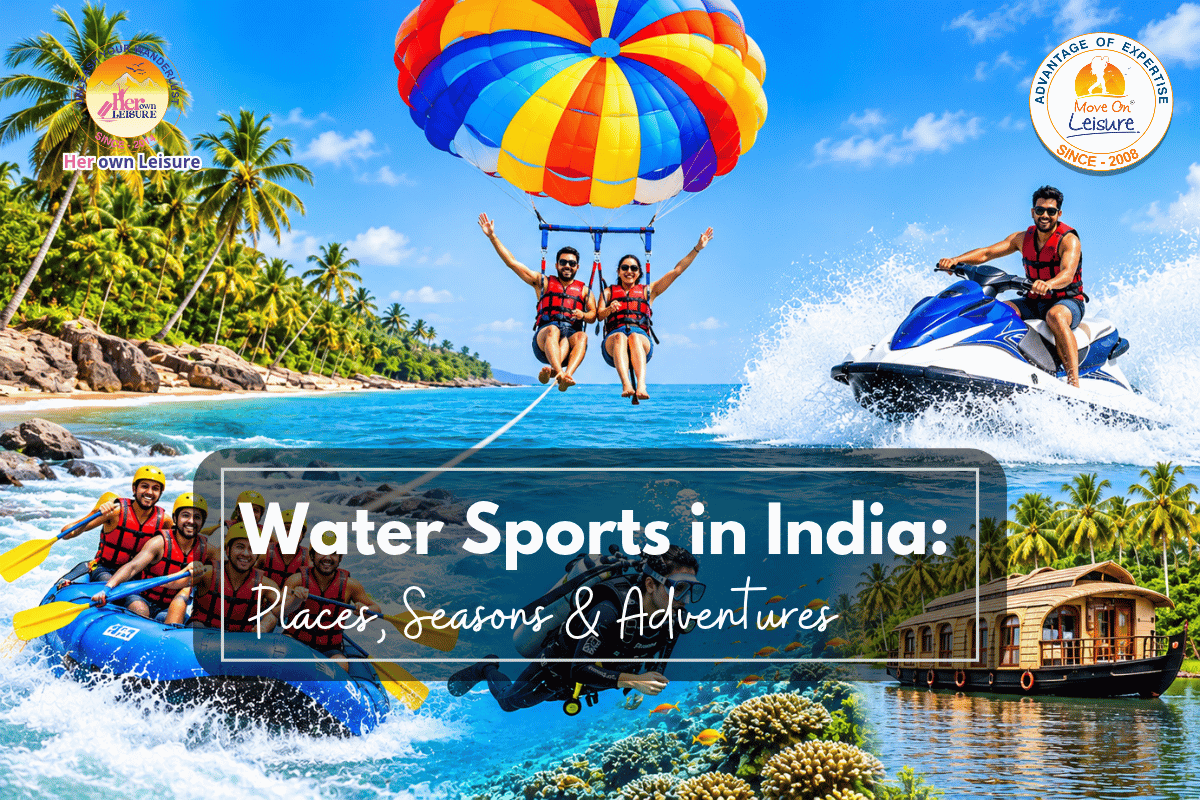
Goa is where most first-timers start. Parasailing, jet skis and banana boats queue up along the sand at Baga and Calangute, and dolphin trips leave from nearby if you’d rather watch the sea than ride it.
The Andaman Islands are worth the journey for the water alone. On Havelock, snorkellers head to Elephant Beach. Not keen on getting wet? Take a glass-bottom boat and watch the reef through the floor.
Rishikesh is the name most people think of first when they hear “rafting”. Stretches vary a lot in difficulty, so pick one that matches your experience.
Dandeli, Karnataka works well as a side trip if you’re already in Goa. The Kali river cuts through dense forest, so there are trees on both banks as you raft.
Tarkarli, Maharashtra has boats to Sindhudurg Fort, plus snorkelling and scuba along the coast. It’s far quieter than Goa, which is half the appeal.
Lakshadweep is a diver’s dream, with reefs and lagoons that rank among the best in India. Sort out the permit first, though. Indian citizens need one too, and you apply through the official e-permit portal. Apply early.
The Kerala backwaters are mostly seen from a houseboat. The narrow village canals are too tight for one, so for those you’ll want a canoe or a kayak.
Travelling with parents or grandparents? Our Senior Citizens Tour Packages are built around an easy pace, which suits a backwater cruise well.
Best Time for Water Sports in India, Coast by Coast
The monsoon puts an end to most sea activity. Rafting is the exception, because it depends on the river. Use the dates below to get your bearings, but expect some give. A few weeks of unusual weather can move any of them.
- Goa: November to May for parasailing. Jet skis, banana boats and other beach rides tend to begin a month earlier, in October. When the rains set in, the operators shut up shop.
- Andaman: October to May, mostly. Dives still get cancelled now and then, because rough seas don’t check the calendar.
- Rishikesh: rafting usually runs from September to June. The restart date isn’t fixed, since it depends on the river level and official clearance, so a booking you can cancel is the safer choice.
- Dandeli: rafting generally runs from October to June. Dam water releases and forest permissions can change things.
- Tarkarli: October to March is the sensible window. You’ll get the clearest water from November to April, and boat and dive trips usually stop once the monsoon sets in.
- Lakshadweep: most visitors go between October and May. During the monsoon, the islands are hard to reach.
- Kerala backwaters: boats go out almost all year. They stay in only when heavy rain or strong winds make it unsafe.
Dates and permit rules change from year to year. Before you pay, check with your operator or an official source.
Water Sports in India for Beginners: What to Try First
You don’t need to be sporty. Begin somewhere calm and work up from there.
- Snorkelling at Havelock or Grande Island (near Goa): the easiest way in. The water is shallow, there’s plenty to look at and you need no experience.
- Kayaking: just as forgiving. The Kerala backwaters and Havelock both have flat, quiet water for it.
- Banana boat in Goa: needs no skill at all. Climb on, grip the handle and expect a good soaking when the boat tips.
- Introductory scuba: book a short session. The instructor stays right beside you, so all you need is to be comfortable in water.
Planning this with your girl gang? Take a look at our ladies only tour packages in Kerala and tell us what you have in mind.
Adventure Water Sports in India for Thrill Seekers
Spend one easy day on the water first. After that, these are worth the step up.
- Rishikesh rafting: Grade III-IV rapids will soak you through, and you’ll almost certainly want a second run. First time on a raft? Ask for an easier stretch and work up to these.
- Dandeli rafting: the same thrill, only with trees closing in overhead.
- Scuba in the Andaman: a single intro dive is often enough to make people sign up for a full course.
- Jet skiing and parasailing in Goa: both are quick, a few minutes at most, so they slot easily into a lazy beach day.
Which Activity Suits You?
|
Activity |
Level |
Good to Know |
|
Backwater cruise |
Gentle |
Swimming not usually needed. Works well for families and older travellers |
|
Kayaking |
Gentle, then steady |
Life jacket worn. Suits calm-water beginners. |
|
Snorkelling |
Gentle |
Life jacket usually provided. A good first activity. |
|
Parasailing and jet skiing |
Steady |
Follow operator rules. Medium cost. |
|
Intro scuba |
Steady |
Basic water comfort and a health declaration. Higher cost. |
|
River rafting |
Steady to demanding |
Life jacket and helmet. Rules vary by grade. |
Planning Your Water Sports Trip
Looking for Thrissur tour operators to plan a water trip? Move On Leisure builds trips around your group, dates and budget. Before suggesting anything, we ask a few simple things:
- Who’s travelling: a group of friends, a family and a set of senior travellers usually want very different paces.
- Comfort in water: someone nervous around waves and someone chasing rapids need different plans.
- Dates, budget and distance: tell us these and we’ll suggest places that fit.
Leave one day free in the plan, in case the weather turns.
Water Sports Safety in India: What to Ask the Operator
Handing over money without asking a few things first is a gamble. Put these to the operator:
- Who trained the instructor? For scuba, look for PADI, SSI or a similar recognised certification, either with the instructor or the dive centre. Rafting guides should be trained too.
- Is there a rescue boat close by, and a first-aid kit on board?
- What if the sea or river is shut that day? Ask whether you’d get your money back or a fresh slot.
- What shape is the gear in? A life jacket should fit snugly and a helmet shouldn’t be cracked. If either looks worn, ask for another.
- Are there age or health limits? Pregnant, or managing a medical condition? Tell them when you book.
- Is there a safety briefing before you get in the water? If there isn’t, walk away.
Before You Go
- Check the season for your coast before booking, and reserve island stays early.
- New to this? Go in the morning. The sea is calmer then, and the queues are shorter.
- Don’t jump straight into rapids or scuba. Do an easy day on the water first.
- Check your travel insurance. Some policies don’t cover adventure activities, including anything with boats or rapids.
FAQs
1. Can I try water sports if I can’t swim?
Sometimes. It depends on the activity and operator, so check the “Good to Know” column above.
2. When is the best season for water sports in India?
That depends on the coast. Most sea destinations run roughly from October to May, though Tarkarli is best from October to March. Rishikesh rafting usually runs from September to June.
3. Is it safe for beginners to try water sports in India?
It can be. Choose a reputed operator with trained guides and proper safety equipment, and don’t skip the safety briefing.
4. Where are the best places for water sports in India if I’m a first-timer?
Havelock in the Andaman, Grande Island (near Goa) or Tarkarli in Maharashtra. All three suit beginners.
5. How much do water sports cost in India?
Canoeing, kayaking and banana boats are the cheaper ones. Scuba, parasailing and rafting cost more. Prices change with the season, so ask for today’s rate.
6. Which activities are good for families?
Backwater cruises and glass-bottom boat rides work for nearly everyone. Older kids can try guided kayaking or shallow snorkelling.
Start Gentle, Go Further Later
Once you’ve settled on a season, most of the planning sorts itself out. What’s left is how bold you’re feeling: a slow canoe ride through the backwaters, or the kind of adventure that leaves your legs shaky at the jetty.
Not sure where to begin? Talk to Move On Leisure about your dates and group size, and we’ll help you plan the rest