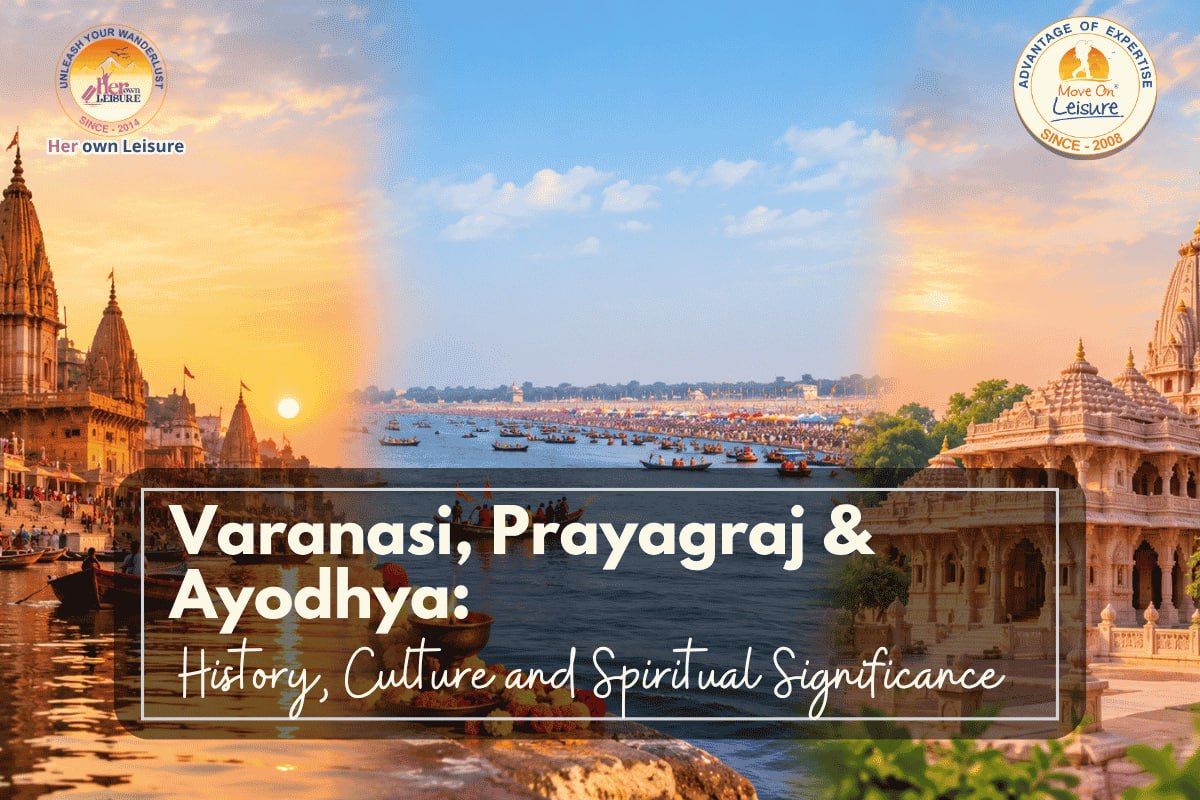
Varanasi, Prayagraj & Ayodhya: History, Culture and Spiritual Significance
Most people planning Varanasi Prayagraj Ayodhya ask the same first question: can this be done as one trip? Yes. They're close enough that almost everyone we send does all three, one after the other.
We're Thrissur Tour Operators, and people ask us about this trip all the time. Not just because it's popular right now (it is), but because three very different things happen in these three cities. The spiritual significance of Varanasi is about death and letting go. The Ram Janmabhoomi Ayodhya story is about a birthplace won back after years of fighting over it. The Triveni Sangam Prayagraj is just... rivers meeting, and somehow that's enough to pull in millions of people.
Varanasi Prayagraj Ayodhya: A Circuit Older Than Most Nations
None of this is new. These three cities are among the most visited pilgrimage spots in the state, but that's just a modern way of describing something much older.
- Varanasi — Shiva's city. Life and death happen out in the open here, not behind closed doors
- Prayagraj — three rivers, one meeting point
- Ayodhya — Ram's birthplace, now turning from a building site into a full temple
Ask ten pilgrims why they came, and you'll get ten different answers. That's what makes this trip hard to explain, but easy to feel.
Varanasi: A City That Bends Time
Kashi, if you ask a local. Some say it's the oldest city on earth that people have lived in without a break, though no one can fully prove that. What you notice first isn't the age. It's the noise, the smell of incense and something burning, and how none of it feels put on for show.
What to See in Varanasi
- The Ganga Aarti Varanasi ceremony at Dashashwamedh Ghat, held every single evening
- Kashi Vishwanath Temple, one of the twelve Jyotirlingas
- The old city's narrow lanes, called galis, barely wide enough for two people
- A sunrise boat ride, worth waking up early for
Best Time to Visit Varanasi
Late October through February. Cooler mornings, calmer ghats. Summer here (April to June) is very hot, and unless a festival is pulling you there, it's best to skip it.
The spiritual significance of Varanasi comes from one old belief: dying here breaks the cycle of rebirth. Even just visiting is thought to count for something. We won't tell you whether it's true or not. We've just seen enough people cry quietly on those steps to know they believe it.
Many women ask us if the ghats are safe to walk alone. Mostly, yes, though some prefer traveling with a group for extra comfort. That's why we also offer Ladies Only Tour Packages From Kerala for this circuit.
Prayagraj: Quiet Most of the Year, Enormous Once a Decade
Prayagraj was called Allahabad until not long ago, and most of the year it acts like any normal mid-sized city. Then once every twelve years, it becomes home to the biggest gathering of people anywhere on earth. Numbers that big stop feeling real after a point.
Skip the Kumbh crowds and the Triveni Sangam Prayagraj is still busy, just at a more normal level. The Ganga, Yamuna, and the Saraswati (which no one has ever actually seen) are believed to meet at one exact spot in the river.
What to See in Prayagraj
- A boat ride out to the exact meeting point
- Allahabad Fort — only some parts are open, don't expect to see it all
- Anand Bhavan, if you're interested in India's fight for freedom
- Hanuman Mandir, known for its lying-down idol
Best Time to Visit Prayagraj
October to February, same as Varanasi. Outside that, try to visit during Magh Mela if you want the crowds and energy without the full Kumbh rush.
The Prayagraj Sangam significance isn't only about religion. Colonial history, mythology, and the freedom movement all mix together here in ways most visitors don't expect.
Ayodhya: A Town Rewriting Its Own Story
If you saw Ayodhya before 2024, forget what you remember. It's a different town now. The Ayodhya history and importance as Ram's birthplace goes back centuries, but the new temple has brought more attention in two years than the previous twenty.
What to See in Ayodhya
- The Ram Janmabhoomi temple complex
- Hanuman Garhi first, always — it's just how it's done here
- The Saryu aarti, smaller and quieter than Varanasi's
- Kanak Bhawan, worth seeing just for how it looks
Here's the interesting part: the Ayodhya history and importance that most people only read about in old religious books is now something you can watch happen on the news. That's rare. Most pilgrimage places don't get to be "in the news."
Planning the Circuit at a Glance
|
City |
Best For |
Ideal Duration |
Main Draw |
Top Experience |
|
Varanasi |
Culture + Spirituality |
2-3 days |
Ganga Aarti, Ghats |
Sunrise Boat Ride & Kashi Vishwanath |
|
Prayagraj |
History + Rivers |
1-2 days |
Triveni Sangam |
Holy Bath at Sangam & Hanuman Mandir |
|
Ayodhya |
Religious Significance |
1-2 days |
Ram Mandir |
Ram Janmabhoomi & Hanuman Garhi |
Five or six days is enough to cover all three cities without rushing. Prayagraj and Ayodhya are both just a few hours from Varanasi by road, so getting between them isn't the hard part. Getting the timing right is.
Planning It Without the Usual Headaches
Here's what usually goes wrong: ghat timings change, crowds show up without warning, and temple rules aren't always written down anywhere. A trip that goes smoothly usually has:
- Travel dates planned around festivals, not just flight prices
- Places to stay close enough that a 5 AM start doesn't feel painful
- Guides who actually answer your questions, not just repeat dates and facts
- Group plans that fit the traveler, since a solo trip and a family of six need very different plans
If you'd rather not sort all this out yourself, Move On Leisure runs this exact trip start to finish.
A Few Things to Sort Before You Go
- Cover your shoulders and knees near temples, no exceptions
- Book Sangam boat rides early during busy months, they fill up fast
- Go early. Everything gets louder and hotter by 9 AM
- Carry cash. Small shops near temples mostly don't accept cards
- Wear slip-on shoes, since you'll be taking them off often
- Carry water always. The heat near the ghats sneaks up on you
- Traveling with older parents? Our Senior Citizens Tour Packages plan in shorter walks and real rest breaks, not just quick pauses
What's Changing Right Now
Ayodhya is changing the fastest. New roads, new hotels, and an upgraded airport are all trying to keep up with the rise in visitors after the Ram Mandir opened. It's one of the few places where you can watch Ayodhya history and importance happen almost in real time.
Varanasi's changes are smaller: better lighting on the ghats and some work on the riverfront. Prayagraj is still benefiting from the roads and facilities built during the recent 2025 Maha Kumbh, which makes now a good time to visit before the next big cycle comes around.
Common Questions Before You Book
What's the best time to visit this circuit?
October to March, when the weather is cool enough for long days of walking and river visits.
What language do people speak in Varanasi, Prayagraj, and Ayodhya?
Mostly Hindi, though English works fine at hotels and near the main tourist spots.
Is vegetarian food easy to find in these cities?
Yes, very easy. Many areas close to the temples, especially in Varanasi, serve only vegetarian food.
How many days should I set aside for all three cities?
Five to six days, without rushing.
Do I need to book Ganga Aarti seating ahead of time?
For a good seat, yes, especially during peak season.
Are the three cities well connected to each other?
Yes, by road and rail. Usually two to four hours apart.
What's the best time to visit Kashi Vishwanath Temple?
Early morning, right after sunrise, before the line forms. That stays true all year.
Three Rivers, Two Kings, One Journey Worth Taking
Three cities, but really one idea runs through all of them: old beliefs that still shape how people live here. The spiritual significance of Varanasi is part of that. So is the Sangam. So is the new Ayodhya, still being built even as we write this.
If this trip has been on your mind, we're happy to help you plan it the right way. Take a look at our 4 Nights 5 Days Varanasi Prayagraj Ayodhya tour, or just get in touch with Move On Leisure directly. We'll build a plan around your pace, your people, and your budget