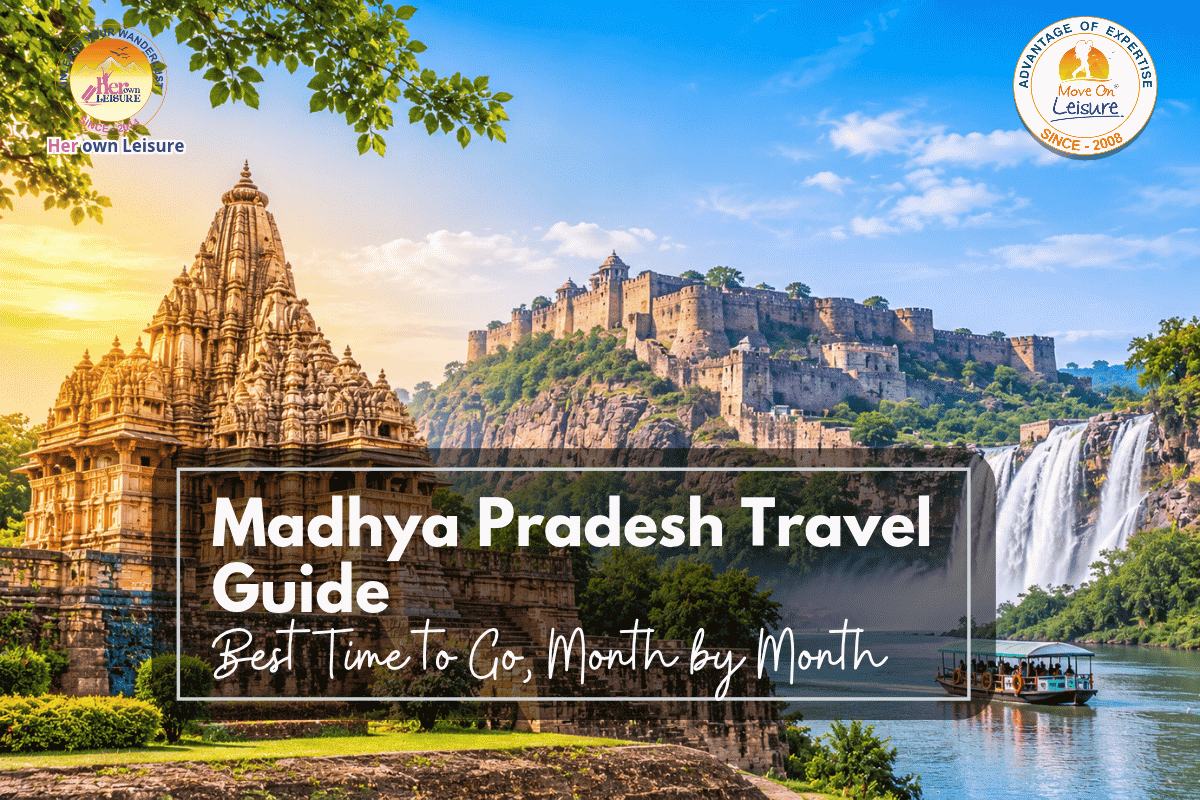
Madhya Pradesh Travel Guide: Best Time to Go, Month by Month
Ask three relatives whether April is too hot for Ujjain and you’ll get three answers. A cousin went in May and was fine, an aunt swore never again, and meanwhile the dates sat unbooked for another week.
This Madhya Pradesh travel guide settles it month by month. If you want the short answer, go between November and February, though October and March aren’t far behind. Planning the Ujjain, Omkareshwar, Maheshwar and Mandu circuit out of Indore? That’s the route this guide follows, from start to finish.
Madhya Pradesh Travel Calendar: Month-Wise Snapshot
|
Months |
Season |
Crowds |
Often chosen for |
|
Oct |
Festive start |
Increasing |
Navratri and Dussehra |
|
Nov to Feb |
Winter |
High |
Temples, Bhopal, Sanchi |
|
Mar |
Between seasons |
Medium |
Maheshwar, heritage, early wildlife |
|
Apr to Jun |
Summer |
Low, except Ujjain in Simhastha years |
Wildlife, quieter visits |
|
Jul to Sep |
Monsoon |
Low, except Ujjain in Shravan |
Green hills, Mandu |
The rows start in October and end in September, so winter stays in one piece.
October
Festival season starts here. Navratri and Dussehra (dates change every year) put events on in most temples and town squares, and every week gets busier than the last. The rains sometimes linger into the first half, so don’t pack your days too tightly.
Winter (November to February)
If we had to send a first-timer in one season, it would be this one.
- Temples: The queue at Mahakaleshwar still takes patience, but you won’t be miserable standing in it.
- Ghats: By dusk the Omkareshwar ghats turn gold.
- Forts: A fort at noon is just a nice walk.
If your parents are travelling, the pace matters more than the month. Families often choose slower options like our senior citizens tour packages, where the drives are usually kept short and the mornings aren’t rushed.
January is when the classic loop makes the most sense:
- Mahakaleshwar first, then an evening by the Shipra at Ram Ghat
- Omkareshwar’s ghats next
- Ahilya Fort in Maheshwar
- Sanchi’s stupa, if you’re passing Bhopal
- End in Indore, at Sarafa Bazaar, after dark. Come hungry.
March
March sits between two seasons. Winter has packed up, summer hasn’t started, and the crowds thin out. Maheshwar is pleasant, and it works for an early wildlife trip if that’s your plan.
Summer (April to June)
Nobody agrees about summer here. Midday can be punishing, yet the roads, ghats and queues are the emptiest they’ll be all year. By two in the afternoon you’ll be hunting for shade, and the stone floors outside the temples can burn your feet right through your socks. The trick is to stop fighting the day:
- Out early
- A long rest indoors
- Out again at dusk
Ujjain in April is doable, and works best with a dawn darshan.
Monsoon (July to September)
Mandu in August is the reason to come in these months. Mist hangs over Jahaz Mahal, the hills turn a deep green, and some corners feel almost private.
Ujjain is the exception, and rain is the other thing to watch:
- Shravan: It falls somewhere between July and August, and the dates move every year. The rest of the state may be quiet, but Ujjain keeps a steady stream of devotees heading for Mahakaleshwar.
- Rooms and queues: Turn up in Shravan without a booking and you’ll struggle to find a room near the temple. The darshan line alone can swallow a morning.
- Rain: Heavy showers slow everything down, and a stretch that looks short on the map can turn into a long, tiring drive.
- Ghats: When the rivers rise, the steps are sometimes shut. Don’t promise anyone a sunset by the water until you’ve seen it open.
The Best Month to Visit Madhya Pradesh
November. The rains have just gone and everything is still green. If it doesn’t work, February is a good second, especially for festivals and heritage sites.
Best Time by Travel Style
Temples: Mahakaleshwar has queues every month. Mahashivratri is the one to plan around: it lands in February or March, and nothing else in the year pulls a bigger crowd. Go knowing you’ll be on your feet for much of the day, and don’t schedule anything after it.
Heritage: Mandu rewards slow walking in the cooler months. Maheshwar’s fort, ghats and handloom sarees suit most of the year. It’s also a relaxed stop for women travelling together, and if that’s you, have a look at our ladies only tour packages from Kerala.
Wildlife: Kanha, Bandhavgarh and Pench are a long way from the Indore loop, so we’d treat them as a separate trip. Summer is actually when tigers are easiest to spot, as animals come to waterholes. Tiger reserves generally keep their core zones shut through the monsoon, so check each park’s reopening date.
Best Time to Visit Ujjain
From November to February, Ujjain is at its easiest. The evening aarti at Ram Ghat is worth building a whole evening around. April to June works only with a dawn darshan. July and August bring the Shravan crowds, and Simhastha years are the busiest of all.
Best Time to Visit Mandu
August is for mist and green hills. In the cooler months, though, you can wander between the palaces without hurrying.
A Five-Day Route That Works
Here’s how a typical trip falls into place, though a slow road or a long queue at Mahakaleshwar can shuffle the days around.
- Day 1: Fly into Indore and head straight for Ujjain, aiming to reach Ram Ghat while there’s still some light. You’ll sleep in Ujjain.
- Day 2: Mahakaleshwar darshan comes first, as early as you can manage. From there it’s the drive to Omkareshwar, where you’ll spend the night. Queues here can run long and push the drive later, so don’t book anything for the evening.
- Day 3: Give the morning to the Omkareshwar ghats, then head to Maheshwar, where Ahilya Fort looks straight down on the Narmada. Night in Maheshwar.
- Day 4: Drive to Mandu and give the palaces a full day. They’re best seen slowly. Overnight in Mandu or close by.
- Day 5: Back to Indore for street food before you head home.
Want Bhopal and Sanchi too? Add two days.
Peak Season and Simhastha
Most people travel in winter, which is why hotels and Bhasma Aarti slots disappear first. From April to September it’s quieter nearly everywhere, though Ujjain in Shravan is the odd one out. Simhastha is another matter entirely. It returns roughly every twelve years, Ujjain hosts it in 2028, and the whole city will be packed. Wait for the official dates before you fix anything, then book early.
Before You Go
- Getting there: Indore is the usual landing point, and Ujjain is around an hour and a half from the airport by road, give or take the traffic. Airlines and Indian Railways change timings now and then, so look at both again a week or two before you leave.
- Bhasma Aarti: It’s held before sunrise at Mahakaleshwar, and entry is by registration, so sort that out on the temple’s official website as soon as your dates are final.
- What to pack: Take a shawl for winter mornings, since they can be properly chilly, and loose cotton for summer. If you’re coming in the rains, shoes with grip matter more than anything else, because the ghat steps turn slippery and flip-flops won’t help.
- Confirm dates: Temple timings, park openings and festival dates move from year to year, so this guide is only a starting point. A call to the temple or park office, or a look at the MP Tourism and IMD websites, should come before any payment.
- Planning help: Peak months fill up faster than most people expect. As one of the Travel Agencies In Thrissur, we are happy to talk through the season, the pace and the needs of older travellers.
FAQs
What is the best month to visit Madhya Pradesh?
November is the safest pick, and the stretch from November to February is good all the way through. October and March work too, if those are the dates you have.
Is April a good time to visit Ujjain?
It can be, if you’re up before the heat is. Plan darshan around sunrise and spend the afternoon in your hotel room, because wandering around at noon in April is no fun.
Is Madhya Pradesh worth visiting in the rainy season?
Yes, if you don’t mind wet roads and want green hills and monuments with hardly anyone around. Mandu is lovely then, though tiger safaris are off the table because most parks are shut.
Does Ujjain get crowded in Shravan?
Heavily so. Rooms go quickly, so if Shravan is the only time you can travel, book the stay first and fit the rest around it.
How many days should I plan for Ujjain, Omkareshwar and Mandu?
Four to five days from Indore. Bhopal and Sanchi need another two.
When is Ujjain’s next Simhastha Kumbh?
It’s due in 2028, and the crowds will stay for weeks rather than days. Look for the official dates first, then book as early as you can.
Which Month Should You Pick?
Start with what the trip is for. If it’s darshan, go in winter. If it’s mist and empty palaces, go in August. If it’s wildlife, plan it separately.
Still unsure which month works? That’s what we’re here for. Tell Move On Leisure your dates, your group and any special needs, and we’ll suggest the best season and plan the loop so everyone enjoys it, from the first darshan to the last dinner in Indore.